Arms and the rogues

Pakistan and China collaborated to arm insurgents in India. THE WEEK investigates a conspiracy hatched by the ISI in Bangladesh

 By Syed Nazakat/Chittagong &Dhaka

 It was past midnight on April 1, 2004, in the coastal city of Chittagongin southeasternBangladesh. Two trawlers carrying munitions, enough to arm a brigade and procured from one of the China’s biggest state-owned defence company, North Industries Corporation (NORINCO) reached the harbour. Top officials ofBangladesh’s foreign intelligence and internal security intelligence guided the trawlers from St Martin’s Island in the Bay of Bengal to the Chittagong jetty, and Nurul Amin, a senior official at the industries ministry, was expected to arrive fromDhakato supervise the unloading and distribution of the consignment. Everything went on smoothly, until two policemen, Mohammad Alauddin and Helal Uddin, saw the consignment and blew the whistle, perhaps unaware of the orders from higher authorities.

 New Delhiwas shocked by the haul, as it was revealed that the arms were meant for insurgent groups in India.Bangladeshhas become, says an Indian military report on the haul, “a key focal point in the transit route of illegal arms in the subcontinent.”

The Criminal Investigation Department (CID) of Bangladesh investigated the case till July this year, and the police have filed charges against some of the country’s top politicians and intelligence officers, including two former ministers and intelligence chiefs. THE WEEK has unearthed official records on the case in India and Bangladesh, and has got exclusive access to the 3,500-page Chittagong case diary. It has also got a copy of the confessional statement of the main accused in the case, notorious Bangladeshi arms dealer Hafiz Rehman, and many important court documents. The documents reveal startling details of how Pakistanprocured  weapons fromChinato fuel insurgency inIndia. And the case is the strongest evidence of Pakistan’s Inter-Services Intelligence andChinacoming together to use Bangladeshi soil against India.

The four-member team ofBangladesharmy’s ordnance branch, which investigated the arms haul, has also confirmed that all 10 truckloads of arms and ammunition were manufactured inChinaby NORINCO, a state-owned arms manufacturer. The seized consignment, which included 1,290 submachine guns, 400 semi-automatic guns, 400 Thompson submachine guns, 150 rocket launchers, 2,000 grenade-launching tubes, 840 rockets, 24,996 hand-grenades and 11,40,520 bullets, was the largest arms haul in Bangladesh’s history.

The case diary says the Directorate General of Forces Intelligence, or DGFI, which is Bangladesh’s military intelligence agency, was penetrated by the ISI to the extent that its then director, Maj.-Gen. (retd) Rezzakul Haider Chowdhury, was an ISI mole. Chowdhury was later promoted as the chief of Bangladesh’s National Security Intelligence. The NSI, too, was penetrated by the ISI and its then chief, Brig.-Gen. (retd) Abdur Rahim, who reports to the prime minister like the DGFI chief, was discreetly working for the ISI.

The Bangladeshi investigators have also found that Chowdhury and Rahim have travelled toLondonand to a Gulf country on their respective passport no Z0171247 and O0397451 to meet ISI officials including its chief to plan anti-India covert operations. Chowdhury and Abdur Rahim were so confident about their cover that they often directed sources by using their cell phone 01812271769 and 01711565850. The Bangladeshi investigators have confirmed their contacts with other military and government officials and other ISI moles through emails, phone intercepts, witness accounts and other evidence.

Both Chowdhury and Rahim, currently in prison, were cultivated by two ISI officers posted at the Pakistan High Commission inDhaka, Brig. Mogisuddin and Col Shahed Mahmud. Mogisuddin facilitated their meetings with ISI officials and arms dealers in Bangladesh,Dubaiand London. “Our investigation has found that the weapons came fromChinaand were procured byPakistanwith the help ofBangladesh’s top intelligence officials,” said Moniruzaman Chaudhory, chief investigating officer. “All [weapons] were destined forIndia.” He said his team had figured out six of seven issues that aChittagongcourt had directed it to solve during the investigation. “The only unsolved issue is the identification of the vessel that transported the arms consignment,” he said.

The conspiracy began in 2000, whenBangladeshwas in political unrest owing to the enmity between the ruling the Awami League and the opposition Bangladesh Nationalist Party (BNP). Many leaders of the Jamaat-e-IslamiBangladesh, who were accused of collaborating withPakistanduring the liberation war and committing war crimes, had returned to the country. The BNP came to power in 2001, forming a coalition with the Jamaat-e-Islami and Islami Oikye Jote.  

During this time, President Pervez Musharraf ofPakistan, under intense pressure from theUSafter the 9/11 attacks, declared that no Pakistan-based group would be allowed to commit terrorism in the name of religion. He banned five jihadi groups that his army had long nurtured. Though the camps were closed, terrorists were shifted to hideaways. Musharraf banned five jihadi groups that his army had long nurtured. To Washingtonand toDelhi, this must have sounded like progress. But though terrorist camps were officially closed, terrorists were shifted to hideaways far away fromPakistan. THE WEEK has learnt that instead of arresting terrorists, the ISI shifted atleast 100 terrorist commanders including Arab fighters of Al-Qaeda fromPakistan to Bangladeshin special Pakistan International Airlines flights fromKarachitoDhaka. In Dhaka, they were kept in safe houses. The houses were owned and protected by DGFI and NSI. The investigators are shocked to found that some terrorist commanders were even kept at NSI DG’s safe house Gulshan area ofDhaka. Saleem Samad, a Dhaka-based journalist who tried to interview a terrorist who was shifted to the city, was arrested by the intelligence agencies and was threatened with death. “My ordeal began the day I went to interview an Arab fighter inDhaka,” said Samad. Once he got the bail he escaped fromBangladeshand took refuge inCanada. (See the box)

Around this time, many Indian terrorist groups were expanding their activities toBangladesh. This correspondent visited Sector 3 in Uttara,VIP Roadin Karnail and Dhanmondi in Dhaka, where commanders of the United Liberation Front of Asom, a militant separatist group inIndia’s northeast, lived for years. It was in Dhaka that Ulfa’s military chief Paresh Baruah alias Kamruj Zaman came under the radar of the ISI. He was flown toPakistanmany a time, and at least once toAfghanistan, where he met warlord Gulbuddin Hekmatyar.

In Dhaka, Baruah’s handler was Brig. Mogisuddin. He introduced him to pro-Pakistan Bangladeshi politicians and intelligence officials. One of them was Gulam Faruk Obhi, a Jatiya Party parliament member. It was Obhi who introduced Baruah to arms smuggler Hafizur Rahman. “We met at a fast food joint atRapaPlazainDhaka. Paresh told me that he might need my help in importing some goods,” said Rehman in his confession statement. THE WEEK has a copy of the statement. He said Ulfa leaders and their families were protected by the DGFI and NSI.

According to the CID’s case diary, the ISI took the help of a Middle East-based Pakistani channel to smuggle weapons. Brig. Rahim and Mogisuddin held several meetings with the channel’s people inDhakaand abroad. Rahim later admitted that he was hooked to the religious programmes on the channel. “Sahabuddin [then director of the NSI] observed this. He told me that I should start a local franchise with the channel,” said Rahim.

One of the meetings, according to the case diary, was held in a Middle East country in 2003 and another inDhakain 2004. The owner of the channel came toDhakaand was received at the airport by NSI officials. The expenses of his stay were met from Bangladesh’s national intelligence fund. Prime Minister Khaleda Zia’s son Tarique Rahman was also present at the meeting. Currently living inLondon, Tarique is widely expected to succeed his mother as BNP chief.

Rahim once met the ISI chief inLondon. The ISI had not received the payment of 2.5 crore takas of the mobile phone bugging devices that the Bangladeshintelligence agencies had bought from Pakistan. “The ISI chief said the devices were a gift from Pakistan,” said Rahim. He, however, did not say anything in his confession on how and when the weapons were procured fromChina. The investigators suspect that Bangladeshi intelligence officials were not aware ofPakistan’s business contacts with NORINCO.

Headquartered inBeijing, NORINCO is the third largest defence company inChinaand makes precision strike systems, amphibious assault weapons, anti-aircraft and anti-missile systems, night vision products and small arms. It has a long-standing relationship with thePakistanarmy. In 1996, the FBI arrested a group of Chinese arms dealers, including three NORINCO representatives, who were trying to smuggle small arms and shoulder-held missile launchers to California. And in August 2003, theUSimposed sanctions on NORINCO after it was caught providingIranspeciality steel used in its missile programmes.

Indian security agencies had information on NORINCO’s involvement in supplying arms to insurgents in the northeast. Jayadeva Ranade, former additional secretary, Research and Analysis Wing, said India had informed China about it but the Chinese repeatedly denied it. “The problem was, neitherIndia’s military intelligence nor R&AW had any intelligence or evidence to prove it,” he said. 

According to the CID’s case diary, the weapons might have been procured in 2003 and a ship, most probably, had come from the Chinese port of BeihaiinQingdao. Confession statements by Hafiz Rehman and another arms dealer, Deam Mohamad, in aChittagongcourt revealed that the ship passed through Hong Kong andMyanmar, and when it reached St Martin’s Island near theMyanmarborder, the consignment was reloaded into two trawlers. “When I asked him [Baruah] about the required permission from theBangladeshnavy, coast guard and customs, he said the NSI and DGFI chiefs had made all arrangements, and the jetty permission had also been obtained,” said Rehman in his confession.

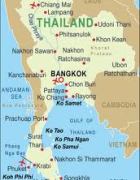
During the final stages of the plan, a tall, stocky man was brought in fromManilato Dhaka viaBangkok. He was Anthony Shimray, the chief arms procurer of the National Socialist Council of Nagalim, or NSCN(IM), the biggest insurgent outfit in the northeast. Shimray was arrested byIndia’s National Investigation Agency on October 2, 2010. He said he had procured arms from Chinese defence companies several times with the help of his middleman inBangkok, Willy Narue.

From Dhaka Shimray went to Chittagongand checked in at the Golden Inn hotel on March 28, 2004. In the hotel ledger he gave his address as 97/5 Sher-e-Bangla road, Mohammadpur,Dhaka.  Shimray and Rehman hired two trawlers―Amanat and FB Khazardan―and, along with some other people, took them to St Martin’sIsland. There they shifted the weapons and ammunition from the ship to the trawlers.

The trawlers passed through Teknaf, in Cox’s Bazar district in Chittagong, on the Myanmar-Bangladesh border. Escorted byBangladesh’s coast guard, the consignment reached the Chittagong Urea Fertiliser Ltd Jetty across the Karnaphuli river, where the trawlers pulled in. The jetty was under the industries ministry, which was headed by Jamaat-e-Islami leader Motiur Rahman Nizami. He is in prison for his role in the smuggling.

As soon as the weapons were seized, the ISI and its operatives inBangladesh began their attempts to derail the investigation.Chittagongwas notorious for arms smuggling and the BNP government tried to pass it off as a routine incident. Lutfozzaman Babar, then home minister, was  allegedly involved in this. Babar was arrested last year and is currently in Dhaka Central Jail. His lawyer Mofizul Hoq Bhuiyan, however, told THE WEEK that he was being victimised. “It is a politically motivated case. He was a bright young politician. His only fault was that he was in the BNP,” he said.

It was a blind case in the beginning. But an unexpected confession changed its course. “We traced Habibullah Rahman, the man who gave trucks for unloading the arms atChittagongjetty. During the interrogation he told us that one officer fromBangladeshintelligence wing, field officer Mohamed Akbar Hossain, had taken trucks from him,” said Chaudhory. Once Hossain was arrested and interrogated he revealed the name of his boss, NSI director Wing Commander (retd) Shahabuddin Ahmed, and when Shahabuddin was interrogated he disclosed the name of his boss, Brig.-Gen. Rahim. It was Rahim who revealed the involvement of DGFI chief Maj.-Gen. Chowdhury. 

When the investigation in the case started, a plot was allegedly hatched by some members of the BNP to assassinate Sheikh Hasina, the opposition leader. Three months after the arms were seized inChittagong, grenades were hurled from the roofs of neighbouring buildings towards a truck on which she was addressing a crowd inDhaka. Eighteen people were killed, though Hasina escaped. Now the investigators have found that the assassination was planned by her own security officers.

Things changed when Hasina’s Awami League defeated the BNP-led four-party alliance in the parliament elections in 2008. A few days after she became prime minister, Hasina initiated a multi-agency review of ISI contacts in the DGFI and NSI. She also arrested Ulfa leaders and handed them over toIndia, including its chairman Arabinda Rajkhowa. “When we took power we realised that there were a lot of wrong things happening in our country,” said Bangladesh Home Minister Shahara Khatun. “We made a clear decision that we are not going to tolerate any act of terrorism in our country.”

The trial ofChittagongarms case at the metropolitan court inChittagongboils down to the names that would pop up. As the testimony has begun at the court,Bangladeshis brimming with speculation. Outside the court-room, the walls of the town, which witnessed many atrocities during the liberation war, are painted with graffiti extolling the 1971 heroes. “The guys who were supposed to protect our country from any internal and external security threat were moles of a foreign intelligence agency. It was a doomsday scenario for us,” said Maj.-Gen. (retd) Syed Muhammad Ibrahim, who fought againstPakistanin 1971.

He said the historic India-Pakistan enmity provides an important context whyBangladeshhas become a spy battleground. “Indiasupported us in 1971 againstPakistan. Today, these guys are collaborating withPakistanto harmIndia. It is a painful paradox,” he said.India, it seems, is aware of it, as the timely intervention of its intelligence agencies has foiled many Pakistan-China attempts to create bloodshed in the country.

(THE WEEK, Dec 11, 2011)

Posted in Uncategorized | Leave a comment

Interview of Shahara Khatun, home minister of Bangladesh

“We have zero tolerance for terrorism”

Shahara Khatun is one of the most trusted aides of Prime Minister Sheikh Hasina and the first woman home minister ofBangladesh.

Excerpts from an interview.

Q. India and Bangladesh have agreed to sign the extradition treaty? How important is this treaty?

A. We hope if we sign it, it will be a landmark treaty. It will check crime and acts of terrorism. There are people who use the India-Bangladesh porous border for illegal activities. Some people from our side cross over the border and take shelter inIndiaand same way some criminals from across the border take shelter inBangladesh. Once we have a treaty it will help us to deal with cross-border crime and terrorism activities. We are scrutinizing the final draft and we hope that the pact will be signed at the earliest.

Q. Will you handover ULFA commander Anup Chetia to India?

A. His case is before the court. We will go by the verdict of court. 

Q. Have you demanded extradition of any person from India?

A. We have requested for the extradition of killers of our father of the nation Bangabandhu Sheikh Mujibur Rahman. According to our information, two of the convicted killers of Bangabandhu – Captain Majed and Risaldar Moslehuddin are hiding inIndia. When I met Indian home minister Chidambaram, I told him, that we suspect that two of the killers of Bangabandhu are hiding inIndia. He assured us that Indiawould do its best in capturing them.

Q. What are your views on Bangladesh’s relationship, particularly in security matters, with India?

A. India is our neighbouring country and a good friend. The bilateral relationship has improved after our prime minister Sheik Hasina’s visit toIndiain 2010 and since then it has been reflected in the top level and successful bilateral visits and meetings. We have signed agreements on mutual legal assistance in criminal matters; transfer of sentenced persons and combating international terrorism and drug trafficking.  

Q. Many in India praise your government’s efforts to combat extremism and terrorism in Bangladesh. What led your government to take the action against terrorists who were hiding in Bangladesh for years?

A. When we took power (in 2009) we realised that there were lot of wrong things happening in our country. We made a clear decision that we are not going to tolerate any act of terrorism and gun running in our country. We cannot allow the soil ofBangladeshto be used for terrorism purposes. It was unanimous decision of our government that terrorists are an international problem and that we should work with other countries in eliminating this scourge. We have taken harsh action against terrorists. As per the verdict of the court we have executed some terrorists and we have banned five terrorist organisations including Hizb-ut Tahrir. Our policy is clear: we have zero tolerance for terrorism.

Q. Is the terrorist outfit Huji still active in Bangladesh?

A. There are few radical individuals but the Huji as an outfit has been fully incapacitated. These radical people know that not only the government even the people are dead against any terrorist activity. There is occasional media hype about the group which is unfortunate. The media reports are largely exaggerated and often fake.

Q. What is the status of Chittagong arms case?

A. Chittagong arms case was a big and complicated case with international links. We have never seen such a big haul of smuggled weapons. We have completed the investigation into the case. The trail has begun and we hope that guilty will be brought to justice.

Q. Who is the prime accused in the case?

A. There are many high profile people including Lutfozzaman Babar, Motiur Rahman Nizami, two former intelligence chiefs and other people involved in the case. All are behind the bars and are now facing the trial.

Q. Is Tareque Zia also wanted in this case?

A. No, he is not wanted in this case. He is accused in the assassination bid on Prime Minister Sheikh Hasina, when she was the leader of the opposition in 2004.

Q. Does the findings of the investigation scare you?

A. Yes, the involvement of so many of our top intelligence officials was frightening. They were supposed to be our protectors.

Q. What was the source of Chittagong weapons?

A. There are international players involved in the case. The weapons shipment began from some other country and many people fromBangladeshandIndiawere behind the arm this smuggling. As the case is under trial therefore I don’t like to speak about it.

Q. I heard that you are a great admirer of Indira Gandhi.

A. She was a wonderful lady and a powerful leader. During our liberation struggle she supported us and our Mukti Bahini. She gave support and shelter to millions of our people. I still recall her visit toBangladeshin 1972 after our liberation.  Her name brings back lot of memories. I recall with great gratitude her strong support for the independence of our country.

(THE WEEK, Dec 11, 2011)

Posted in Uncategorized | Leave a comment

INTERVIEW of Mohammad Abul Kashem, Chittagong police commissioner

“All guns seized in Chittagong are manufactured outside Bangladesh”

The port city of Chittagong is a transit point in international small arms trafficking. In an interview with THE WEEK, Chittagong police commissioner Mohammad Abul Kashem spoke about his resolve to stop this menace. Excerpts:

Is Chittagong a key transit route for arms trafficking in South Asia?

I don’t agree with that assumption. Yes, there have been incidents of smuggling. We have cracked down on illegal arms trade. To understand how arms trafficking works, you have to look at the larger picture.

What is the larger picture?

All weapons we have seized in Chittagong are manufactured in foreign countries. Most of these come through the sea. There are people: the international arms companies and their dealers who sell these small arms to terrorists, criminals and underworld dons. These arms dealers enjoy political backing.

What drives the trade of illegal arms in Bangladesh?

There are two reasons behind this. First, Chittagong is a port city with a long and porous border. Second, our country is situated between the Golden Triangle of drug-producing countries and the arms-producing sub-region.

What was the most surprising thing about the Chittagong arms haul?

The involvement of our top intelligence officers was really shocking.

What steps have you taken to prevent arms smuggling?

We have improved our coastal security. There is better coordination between our coast guard and the navy. But we are aware of our shortcomings, too. We have only a limited police force.

Posted in Uncategorized | Leave a comment

When I went too close to the story

By Saleem Samad

It was a late-night call. The caller told me in rustic English that they were coming to pick us up from the hotel. I had been commissioned by Channel 4 to help its crew working on the Unreported World programme. During our investigation in November 2002, we came to know that some terrorists were hiding in Dhaka. We wanted to interview them. The call was from one of their commanders.

After an hour, a van arrived at the hotel. We were blindfolded and driven around Dhaka to make us lose our sense of direction. Finally, we were taken into a building where we saw half a dozen men with AK-47s. We were asked to wait for the commander. After some time, a tall and broad-shouldered Arab fighter came to meet us. He refused to be photographed or interviewed and said he had kept his promise to meet us. We were again blindfolded and then left in the middle of the city. On November 25, Zaiba and Bruno, two Channel 4 staffers who were with me, were arrested.

I wasn’t with them that day. It was then that I realised that we were being followed by the military intelligence sleuths. A friend in the security establishment told me that we had committed a big mistake. He said the place where the terrorists hid was in fact a safe house of the Directorate General of Forces Intelligence (DGFI) and the man we met was an al Qaeda commander. I couldn’t believe that the terrorists were protected by the agency which was supposed to arrest them.

The news left me shocked and frightened. I knew we went too close to the story. We had blown a cover of the DGFI. By that time, DGFI men had surrounded my home. I called my brother and said I would stay at a friend’s place. The intelligence agencies had tapped his phone and they heard our conversation. That night they raided my friend’s place and arrested me. I was brutally tortured for days.

My interrogators wanted to know how much we knew about their safe houses and covert operations. Then, after 50 days in custody, I was released on January 18, 2003. I thought my ordeal was over. Hardly did I know that I would be forced to leave my country. After my release, a friend in the government told me that there was a plan to assassinate me. To save my life, I fled to Canada, where I got asylum. Salem returned from Canada only in 2010 after the change of government in Bangladesh. He lives in Dhaka with his wife and son and is planning to write a book on his ordeal.

Salem returned from Canada only in 2010 after the change of government in Bangladesh. He lives in Dhaka with his wife and son and is now planning to write a book on his ordeal.

As told to Syed Nazakat

Posted in Uncategorized | Leave a comment

An international conspiracy

The Chittagong arms haul was an international conspiracy in which operatives from several countries and backgrounds were involved. The case diary reveals how meetings were held in different countries to formalise and execute the plan.

China: China North Industries Corporation (NORINCO), a state-owned enterprise, manufactured and supplied the weapons.

Pakistan: The Inter-Services Intelligence planned a meticulous cross-border arms smuggling operation by penetrating the Bangladeshi intelligence agencies. The

UK: It was in London where the Bangladeshi National Security Intelligence chief, Brigadier Rahim, met the ISI director-general. It was revealed that the ISI did not receive the payment of Taka 2.5 crore for mobile phone bugging devices, which Bangladesh intelligence agencies had procured from Pakistan.

The Philippines: Anthony Shimray, a key Naga leader and chief arms procurer, came to Chittagong from Manila via Bangkok to take part in the operation. He was arrested by the National Investigation Agency on October 2, 2010 and is currently in jail.

Bangladesh: The ISI had developed contacts within the Bangladesh army and intelligence agencies, which had already cultivated militant groups in the fight against India. Brigadier Mogisuddin, who was Ulfa leader Paresh Baruah’s handler in Dhaka, took over as ISI station chief in Bangladesh and was in charge of the operations.

Posted in Uncategorized | Leave a comment

Reborn in Riyadh

The first look inside the Al-Qaeda Rehab Camp in Saudi Arabia.

By Syed Nazakat in Riyadh & Jeddah

He is an expert in plotting terror strikes. His first mission was to fight the US in Afghanistan and then help the cause of jihad (holy war) worldwide. But in Guantanamo Bay detention camp, Khaled Al-Bewardi was merely No. 68. Al-Bewardi was 21 when he first heard about al Qaeda’s recruitment forAfghanistanin 2003. The jihadi videos about Palestine, Chechnya, Kashmir and Afghanistan convinced him to fight for the “oppressed Muslim”. In November 2003, he lied to his parents that he was off to camp in the desert with friends, a popular pastime of young Saudis. In truth, he, like hundreds of al Qaeda operatives, left for Pakistan. 

At loose ends and casting about for a cause, one of his friends suggested that they go see Osama bin Laden, founder of al Qaeda. But before his group could reach Afghanistan and bin Laden, he was arrested inKarachiby a joint team of the US Central Intelligence Agency and Pakistan Special Forces. He was taken to Afghanistan and from there to Guantanamo Bay, a US enclave in Cuba. 

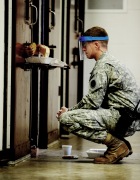
After six years there, he was asked to leave his cell and board an aircraft. He thought he would be killed in the air. As he covered his head with his hands and prayed, the Saudi aircraft winged its way toRiyadh. He disembarked in Thumamah, a former desert resort half an hour’s drive north of the Saudi Arabian capital. Though he did not realise it, he was at another of life’s crossroads. In Thumamah, he could use an indoor swimming pool and a gym, and eat in an airconditioned dining hall with hundreds of other al Qaeda supporters. There was kasba (meat with rice) or theNajdregion speciality, hashi (baby camel). In the evenings, they would paint or play football. On weekends, their wives would join them. 

After few months at Thumamah, Khaled was released, with a monthly allowance of 3,000 Saudi riyals, a car and a job. “When I look back at the dark days of my life, it seems like a miracle that I am alive today,” said Khaled, the first reformed al Qaeda man to speak to the Indian media. “My life has suddenly changed for good.” 

Welcome to anti-Guantanamo; that’s what the Saudis call Thumamah. Technically it is a prison for jihadis, but there is no solitary confinement. Inmates have lavish quarters and are free to relax, play and call home any time. The only giveaway is the curl of barbed wire atop the compound wall.

Thumamah is the base for Saudi Arabia’s rehabilitation programme for former radicals and al Qaeda operatives. The centre is run by the interior ministry, and is assisted by the ministries of education and religious affairs. A number of universities and institutes help prepare the rehab programme. 

Saudi Arabiahas successfully rehabilitated more than 3,500 al Qaeda men, of whom 493 were suspected al Qaeda operatives who were arrested in Iraq, Afghanistan and Pakistan. Around 10 per cent of Saudi detainees have refused to participate in the programme. “Some are still consumed by hatred and corrupt ideology,” said Dr Abdulrahman Al-Hadlaq, director-general, ideological security directorate (see interview). “It will take us some more time to win them over.” 

Al-Hadlaq said that the driving force behind al Qaeda-related terrorism is the ideology. Sometimes, he said, inmates throw tough questions like why they were permitted to wage jihad against the USSR in Afghanistan, but not the US. He said: “We tell them that jihad is admissible in Islam only if it is waged with the consent of the country’s leader, the permission of both parents and if a fatwa [religious decree] is issued.” 

The Thumamah centre is divided into six areas; four for those who fought inIraqand two for those  from Guantanamo Bay. A day at the centre begins early, with a call to prayer. From Saturday to Thursday inmates attend daily classes. There is an exercise session before breakfast. From 10 a.m. till lunch, there are classes on religion and history, where students are engaged in debate and dialogue. Post lunch, there are classes on art therapy and anger management. After dinner, there is roll call at 9 p.m. and then lights off. 

The rehab programme employs dozens of religious scholars, psychologists, psychiatrists and other specialists, who try to persuade the young men that their behaviour goes against the fundamental teachings of Islam. The six-week course covers issues such as jihad, sanctity of human life, suicide bombings, relations with non-Muslims, about people who can issue a fatwa and about takfir, the practice of declaring other Muslims to be apostates. 

Dr Ali Al-Afnaan, coordinator of the rehab centre and psychologist at the interior ministry’s King Fahd Security College, said it was difficult to put the inmates through art therapy. “They are not interested in art and painting,” he said. “They say it is for school kids.”

But by and by, the men start expressing their feelings through art. Most begin with sketches of rugged mountains, maybe a hangover fromAfghanistan. Others paint in red or orange, indicating bloodshed and experiences inGuantanamoBay. “As time passes they start sketching different objects in different colours,” said Al-Afnaan. “That gives us an indication that the person is recovering.” 

Khaled, who now lives with his wife and two children inRiyadh, said the rehab programme was the best thing that happened in his life. “Allah has given me a chance to correct myself,” he said. 

Tamir Al-Fahad was picked up fromIraqand spent three years inGuantanamoBay. He now lives with his family in Hafar Al-Batin, 480km north ofRiyadh. Talking to THE WEEK, he came across as a jovial man who held no grudge towards his American interrogators. “I want to forget the past,” said Tamir. “God has given me a new life and a chance to serve my parents.” 

Another al Qaeda operative, Ahmed al-Shayea, exploded an oil tanker near the Jordanian embassy inBaghdad, killing scores of passersby. He was catapulted from the tanker and was burnt badly. “I repent those killings,” said Ahmed. 

Most of the former al Qaeda men interviewed by THE WEEK were not ideologues, but foot soldiers. Saudi officials said these ex-jihadis lacked understanding of Islam and were easily influenced by al Qaeda propaganda. Hence, the rehab programme’s module on Islam and the sanctity of human life. 

Another thorny issue was the return of the prodigals to their families. Prince Mohammed bin Naif bin Abdul Aziz Al-Saud, deputy minister of the interior and architect of the rehab experiment, often hosted Guantanamo inmates and their families in posh Riyadh hotels, encouraging them to bond and relax. 

Once free, The kingdom pays the freed inmates a monthly allowance: SR 3,000 for those fromGuantanamoBay, and SR 2,000 for the rest. It also helps them find work and, in some cases, even a wife. There is a gift of SR 50,000 towards wedding expenses. The rehab programme began with an act of generosity by Prince Mohammed. After 9/11, where 15 of the 19 aircraft hijackers were Saudis, the prince’s father, Minister of the Interior Prince Naif bin Abdul Aziz Al-Saud, vowed that there would be no mercy for any al Qaeda operative in the kingdom. The world was looking atSaudi Arabia, because Osama bin Laden himself came from one of the richest families in the kingdom.

In July 2003, Abdul Rahman Al-Ghamdi, a hardcore al Qaeda operative, surrendered to Prince Mohammed. Instead of throwing him in a high security prison, the prince asked one of his sheikhs to live with Al-Ghamdi and ensure that he did not abscond. After living with the sheikh, who challenged his radical ideas, Al-Ghamdi repented his joining the al Qaeda. The prince was then convinced that rehab would work. So, in late 2007, the Thumamah centre was opened.  

The centre had been widely praised and has had a clutch of high-profile visitors, including former British prime minister Gordon Brown.Saudi Arabiahas submitted a draft of the intellectual security strategy to the council of Arab interior ministers. Indian ambassador toSaudi Arabia, Talmiz Ahmad, said 9/11 helped Saudi reformers fight religious extremists. “The Saudi authorities have initiated awareness programs in schools, in communities and even in mosques,” said Ahmad. “But it is the rehab program that has made a huge difference. It has given an alternative to the world to deal with terrorism.” 

The kingdom is building five more centres across the country. The new centres will be more spacious and comfortable with professional playgrounds and music system for each individual. Interestingly, Osama’s family concern, the Saudi Binladin Group, is building these centres. Interior ministry spokesman General Mansour Sultan Al-Turki said, “We have cracked down on terrorist cells and financing. We have killed and arrested many terrorists. But we realised that the use of force alone will not contain al Qaeda. This is the struggle of one of mind over another.” He said military officers with extremist views have been fired, along with teachers and imams who gave hate speeches. 

The rehab programme has had its challenges as well. At least six freed inmates escaped toYemenand rejoined al Qaeda. One of them, Said Al-Shihri, is now a senior commander in theArabian peninsula. Turki said after Osama’s killing, al Qaeda leadership was concerned more with establishing a broad ideological programme for the network, rather than maintaining control. “That is why it is important for us to combat the ideology of al Qaeda,” he said.  

And, al Qaeda has made it amply clear that it has the centre and its sponsors in its gunsights. Prince Mohammed, reportedly, has had four attempts on his life. In 2009, during the holy month of Ramzan, he granted audience to an al Qaeda man who said he wanted to surrender. The prince had a narrow escape when the man blew himself up. 

I was travelling to Jeddah, with my interpreter Majid Al-Gandhi, when an assassin attempted to kill Prince Naif. Returning to hotel that night, our car was stopped and searched at one of the many checkpoints that had sprung up in the city. Jeddah, some 800km fromRiyadhand on the coast, is Osama’s hometown and he founded al Qaeda here. Between 1982 to 1992, around 20,000 men, mostly from this area and from the south, joined him in Afghanistan. Over 5,000 died fighting. 

Nowhere are the contradictions of modern Saudi Arabia more evident than in Jeddah. Restaurants in the city are manned by Indian cooks and the taxis by Pakistanis. Seen from afar, soaring, sparkling, stunning modern buildings tower above the desert and camels. Amid the luxury cars and SUVs, slip the mutaween (religious police) hurrying the faithful to prayer. During the holy month, everything is closed during the day. Dusk sees the miles of freeways choked with cars headed to shopping malls that remain open until dawn. 

“We are being carried backward and forward at once,” said Jamal Khashoggi, former editor of Al-Watan, a Saudi daily. A good friend of Osama, he last met him inSudanin 1995. “The kingdom officially supported the Jihad against theUSSRinAfghanistan,” he said. “Abdul-Aziz bin Baz, the then Grand Mufti, declared jihad and supported Osama’s call. Today, we are fighting the same guys.” 

He said the Arab Spring disproved al Qaeda’s ideology of violence and bloodshed. “All his life, Osama propagated that only violence can bring change,” he said. “That ideology was defeated the day thousands of people took toTahrir Square[inEgypt] to seek political change and freedom.” 

Saudi experts said that pampering by the state made the youth lazy. Saudi has around six million expat workers, nearly half the number of the kingdom’s working-age population. “Those who join al Qaeda are a product of our social failures. They are raised in a welfare state,” said Dr Saleh bin Sulaiman Al-Wahaibi, secretary-general of the Riyadh-based World Assembly of Muslim Youth. “We allowed them to grow up in isolation and in a pampered atmosphere until they turned to Osama in an effort to find themselves.” 

Yusef Abdullah Saleh Al-Rabiesh, No. 109 in Guantanamo Bay, returned to Saudi Arabiain 2006. He echoed the views of Al-Wahaibi: “Most of us who joined al Qaeda were restless youth. We had no clue about the outside world. We just wanted to go and fight theUS.” Some of his friends from the neighbouring province of Al Bahah, one of the kingdom’s most obscure regions, brought the world to a standstill when they carried out the 9/11 terrorist attacks.

Authorities in Jeddah admit that al Qaeda is trying hard to fills its ranks with the alienated Saudi youth. But it does seem clear that the kingdom is taking the challenge seriously. As al Qaeda enlists 36 per cent of its recruits through the internet, the kingdom has hired hundreds of Islamic scholars to blog and fight online radicalisation. 

On a sunny afternoon, Al-Afnaan took 20 inmates from the centre to Masjid al-Haram, the holiest shrine in Islam and the world’s largest mosque, inMecca. In the grand mosque, walking slowly across the vast square of polished marble, some sought God’s blessing and refuge, while others wept loudly. Al-Afnaan said: “Who would have imagined that one day these people with such a violent past would leave the path of terrorism?” After a brief pause, he whispered: “Allahu Akbar.” 

(THE WEEK, Oct 2011)


Posted in Uncategorized | Leave a comment

Interview Of Dr Abdul Rahman Al-Hadlaq, Director-General, Ideological SecurityDirectorate,Saudi Arabia


“You can’t fight al Qaeda with force alone”

As chief of ideological security at the Saudi interior ministry, Dr Abdul Rahman Al-Hadlaq leads religious scholars, psychologists and art therapists in a project to rehabilitate former al Qaeda operatives. He also advises Prince Mohammed bin Naif bin Abdul Aziz Al-Saud, deputy minister of the interior and architect of the rehab experiment. In an exclusive interview at his Jeddah office, Al-Hadlaq told THE WEEK that four years ago, when he and his colleagues were asked to draft the rehab programme, he had fears about its viability and success. Today, the programme is widely praised and is being replicated in many countries. Excerpts from the interview:

How successful is the programme?

It has been very successful. We have rehabilitated over 3,500 suspected terrorists, including 493 suspected al Qaeda men. We are building five more rehab centres in the kingdom, each with a capacity to house 250 people. At the centre we are dealing with two questions: how to protect the youth from al Qaeda, and how to rescue the affected. We are clear that al Qaeda cannot be defeated without engaging it ideologically. Use of force against radicals is a short-term answer. It creates more radicals in the long run. 

What are the key components of the programme?

The main components include psychological counselling, a religious de-radicalisation course and art therapy. 

How did the rehabilitation programme start?

After the 9/11 attack, we were shocked to discover that 15 of the 19 hijackers were disgruntled Saudi youth. We started investigating and found many suspected terrorists and radicals in the country. We did not have enough prisons to keep them. And when we jailed some, they spread radical ideas among other prisoners. Then Prince Muhammad came up with the idea of the rehab camp. We started the programme in late 2007.  

How difficult was it to rehabilitate detainees from Guantanamo Bay?

It was a big challenge to bring them back to normal life. They were silent, hated sunlight and wanted to be alone. Initially, they were not even ready to talk to us. After psychological counselling and art therapy, we engaged them in dialogue. We educated them about history and religion. al Qaeda always presents history as a fight between Muslims and non-Muslims…, which is not true.

How are you combating the ideology of al Qaeda?

We are working on different fronts. We have sacked 353 radical imams. Some 1,300 religious clergymen have been placed on suspension. We have employed women preachers to talk to women who have adopted radical ideology. [It was found that around 60 per cent of al Qaeda websites were operated by women.] As al Qaeda uses religion to justify violence or attract recruits, we have launched a number of websites to counter Al-Qaeda’s propaganda. Its message is not necessarily religious, but it is using religion to communicate it. [The Saudi Council of Senior Ulema launched an official website, www.alifta.com, for fatwas.] 

Many people say that instead of punishing them, you are giving terrorists royal treatment.

I know. Some people do not see the point. Our experience teaches us that terrorism is the biggest threat to security and peace, and we will never be able to defeat it by force alone. If we do not support them, someone else will support them, and usually it will be the radicals. Terrorism is a byproduct of ideological extremism. So, rehabilitation should be a critical part of counter-terrorism.

How does al Qaeda recruit its cadets?

They isolate an individual from all external contacts, including family and friends. As the recruit begins the process of assimilation, the group identity exerts itself through the indoctrination. Most of the Arabs who joined al Qaeda are young. They were mostly single Saudis who were high school graduates and were frustrated with national and international issues.

Most recruits come from lower middle class families, but a few are from rich families, too. Many of these men believed that the west, led by theUS, is engaged in a war against Islam. They felt that Muslims are obligated to defend their religion, and violence is a necessary means to achieve this end. Thirty-six per cent joined the group after seeing the website. Surprising, most of the group’s websites are hosted in the west.

Is al Qaeda still active in Saudi Arabia?

We have almost defeated the group here. Our sustained campaign to discredit al Qaeda ideology has forced the group to move out. Most of them have taken refuge inYemen, where there is political instability.

Who heads al Qaeda in the Arabian peninsula?

Nasir Abdel Karim al-Wuhayshi is al Qaeda’s commander-in-chief in theArabian peninsula. He was Osama bin Laden’s secretary, and is Saudi’s most wanted man. 

How powerful is al Qaeda after Osama’s death?

It remains a powerful terrorist group. Osama’s killing gave the outfit a big blow, but over the last many years he was not controlling operations.

There are reports that the remaining inmates of Guantanamo Bay will be sent to Saudi Arabia, after the facility is closed?

Our priority is to handle and rehabilitate our citizens. But we are always ready to help our neighbours, the Yemenis. Reportedly, Yemenis make up the largest nationality among the 170 detainees left atGuantanamoBay. We know that theUSis reluctant to send Yemenis home because of the security situation there.

Posted in Uncategorized | Leave a comment